Is Feeling Nervous on the First Night After Marriage Normal?
First night anxiety after marriage is a common and normal experience for many adults. Based on sexual health education research and real-world relationship concerns, feelings such as nervousness, emotional tension, or uncertainty often arise due to social expectations, limited sexual education, and the pressure associated with a major life transition. These reactions are not signs of personal failure or relationship problems, but natural stress responses. With accurate information, reassurance, and respectful communication, first night anxiety typically reduces as comfort and emotional safety develop.
Why Does First Night Anxiety Happen?
1. Emotional Pressure is a Common Experience
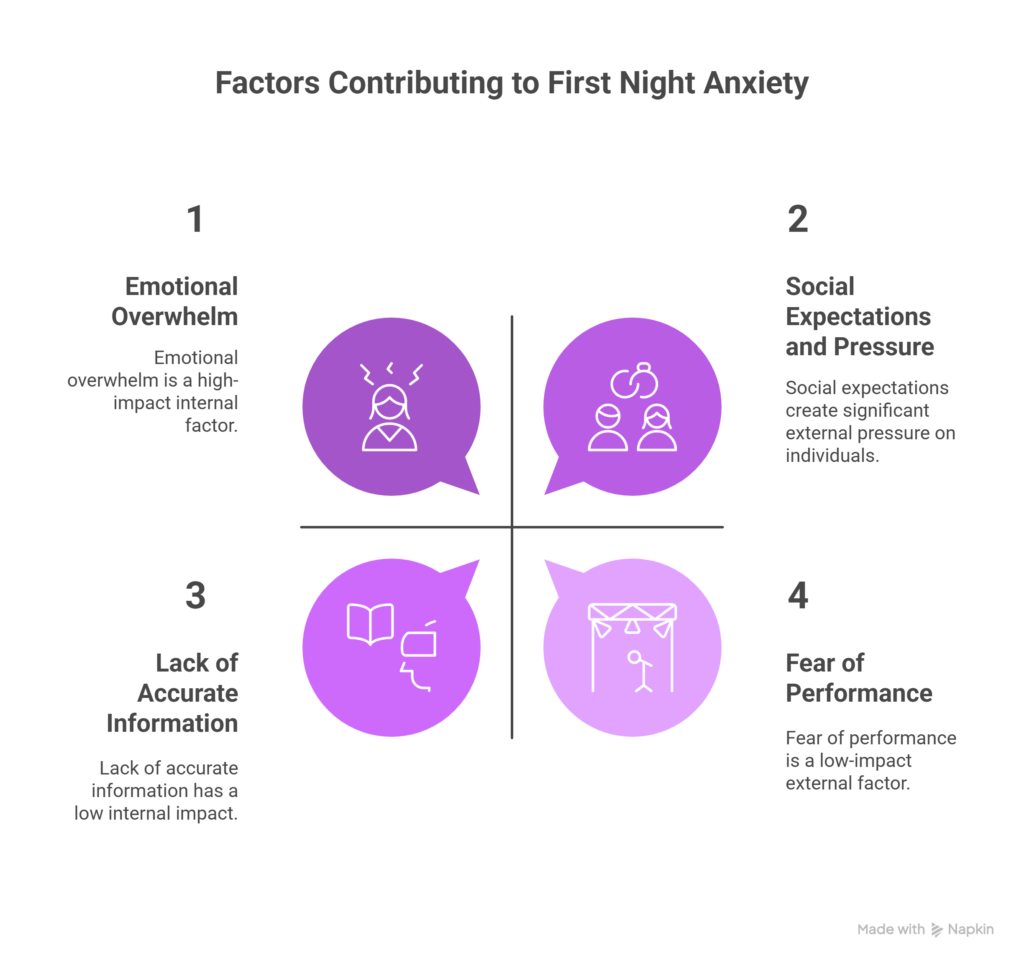
First night anxiety after marriage often starts with emotional pressure rather than physical issues. Marriage represents a major emotional shift, and the sudden change in roles, expectations, and intimacy can naturally create nervousness. This reaction is normal and does not indicate a problem with the relationship or personal readiness.
Why Emotional Pressure Builds Naturally
Emotional pressure builds because the first night is often treated as a symbolic milestone rather than a simple private moment. Cultural beliefs, personal expectations, and imagined standards combine to increase mental stress. When too much importance is placed on “getting it right,” anxiety becomes more likely.
Key Contributing Factors
- Sudden transition from single life to married responsibilities
- Social and cultural expectations attached to the wedding night
- Internal pressure to perform or behave in a specific way
- Fear of judgment, even when none is expressed
What Many People Experience
Emotional pressure commonly appears through subtle mental and physical reactions. These experiences are widespread and shared by many newly married individuals, even if they do not openly discuss them.
Common Emotional and Mental Responses
- Nervousness or unexplained restlessness
- Excessive thinking about what should happen
- Fear of disappointing one’s partner
- Difficulty relaxing or staying present
- Increased self-awareness and self-doubt
Emotional pressure usually reduces on its own when expectations soften, communication improves, and the couple allows the relationship to develop naturally rather than forcing a specific outcome.
2. Limited Sexual Education Increases Anxiety
Limited or unclear sexual education can significantly increase first-night anxiety after marriage. When individuals lack accurate, factual knowledge about intimacy, the experience may feel unfamiliar and overwhelming. This uncertainty often leads to stress, self-doubt, and unrealistic expectations about how intimacy should occur.
How Misinformation Affects Confidence
In the absence of proper education, many people depend on information from peers, movies, social media, or cultural myths. These sources frequently present distorted or exaggerated views of intimacy, which can create unnecessary fear. Misinformation lowers confidence by making people question their own reactions, timing, and responses.
Common Effects of Misinformation
- Fear of doing something “wrong”
- Unrealistic expectations about performance
- Anxiety about physical responses
- Pressure to match false standards shown in media
Important Considerations
Gaps in sexual knowledge often translate directly into emotional tension. When individuals do not understand what is normal or expected, even minor uncertainties can feel like serious problems.
Key Knowledge Gaps That Increase Anxiety
- Misleading information from friends, films, or online content
- Lack of open, honest discussions before marriage
- Confusion about natural physical and emotional responses
- Uncertainty about pacing, comfort, and consent
Improving awareness through accurate information, open communication, and realistic expectations helps reduce anxiety and allows intimacy to develop in a healthier and more comfortable way.
3. Anxiety Does Not Indicate Lack of Attraction
Feeling anxious during the first night after marriage does not mean there is a lack of attraction or emotional connection between partners. Anxiety is a natural response to change and significance, not a measure of desire or affection. Many people experience nervousness precisely because the relationship matters to them.
Why Anxiety Appears During Important Moments
When a moment carries emotional weight, the mind and body often respond with heightened alertness. This stress response can occur even when feelings are positive and genuine. The pressure to meet expectations or avoid mistakes can trigger anxiety, despite strong attraction and emotional closeness.
Common Reasons Anxiety Surfaces
- High emotional importance of the moment
- Desire to please or meet expectations
- Fear of disappointing a loved one
- Overthinking outcomes instead of staying present
Helpful Reminders
Recognizing the difference between anxiety and emotional disinterest helps reduce unnecessary self-doubt. Anxiety often reflects care and emotional investment rather than a lack of connection.
Key Points to Remember
- Anxiety and attraction can exist at the same time
- Stress does not mean rejection or disinterest
- Emotional sensitivity is a normal human response
- Calm and comfort often grow with time and familiarity
Understanding this distinction allows couples to approach intimacy with patience, reassurance, and realistic expectations, which naturally eases anxiety over time.
4. Cultural Expectations Add Unnecessary Stress
Cultural narratives often place unrealistic importance on the first night after marriage. Movies, traditions, and social messaging can create rigid ideas about how intimacy should unfold. These expectations add pressure and can turn a private moment into a performance, increasing anxiety instead of comfort.
Unrealistic Ideas About Intimacy
Many people grow up believing there is a “right way” for the first night to happen. This belief creates mental pressure to match an imagined standard rather than focusing on mutual comfort and connection. When reality does not match these ideals, self-doubt and stress often follow.
Common Cultural Misconceptions
- Intimacy must happen immediately and perfectly
- Both partners should feel confident and relaxed instantly
- Emotional or physical hesitation means something is wrong
- Silence implies shared understanding rather than uncertainty
Things Worth Noting
Cultural pressure often works quietly, influencing thoughts without being openly discussed. Recognizing these influences helps reduce anxiety and encourages healthier expectations.
How Cultural Expectations Increase Anxiety
- Comparison with others’ stories or assumptions
- Fear of judgment from family, peers, or society
- Lack of honest conversations about real experiences
- Pressure to meet traditional or social standards
Letting go of cultural myths and focusing on personal comfort, communication, and trust allows intimacy to develop naturally and reduces unnecessary emotional stress.
5. Physical Fatigue Can Contribute to Anxiety
Wedding celebrations often involve long hours, travel, social interaction, and disrupted sleep. This physical exhaustion can significantly affect emotional balance. When the body is tired, even small stressors feel more intense, making it harder to relax and feel emotionally present during intimate moments.
The Connection Between Body and Mind
Physical fatigue directly impacts mental clarity and emotional regulation. A tired body reduces the mind’s ability to cope with stress, process emotions calmly, and stay focused in the present moment. As a result, anxiety may increase even when there is no underlying emotional issue.
How Fatigue Affects Emotional Responses
- Reduced ability to handle stress effectively
- Slower emotional processing and decision-making
- Heightened sensitivity to pressure or expectations
- Lower tolerance for unfamiliar or emotionally charged situations
Relevant Observations
Fatigue often shows up in predictable physical and emotional reactions. Recognizing these signs helps normalize the experience and prevents unnecessary self-judgment.
Common Fatigue-Related Reactions
- Low energy levels and physical heaviness
- Difficulty relaxing or winding down
- Increased irritability or emotional sensitivity
- Trouble concentrating or staying mentally present
Allowing time for rest, hydration, and recovery helps restore emotional balance and naturally reduces anxiety, making intimacy feel more comfortable and unforced.
6. Anxiety Can Affect Both Partners
First night anxiety is not limited to one gender or one role within the relationship. Both partners can experience anxiety, although it may express itself in different ways. Emotional pressure, unfamiliarity, and concern for the other person’s comfort commonly affect both individuals.
Different Concerns, Similar Feelings
While the specific worries may differ between partners, the underlying emotional response is often the same. Each person may feel responsible for ensuring the experience goes well, which can create parallel forms of stress and self-doubt.
How Anxiety Manifests Differently
- One partner may worry about performance or timing
- The other may worry about comfort, pain, or emotional readiness
- Both may feel pressure to meet unspoken expectations
- Both may hesitate to express concerns openly
Common Experiences
Despite different perspectives, many emotional reactions overlap. These shared feelings are normal and reflect emotional sensitivity rather than incompatibility.
Anxiety Shared by Both Partners
- Performance-related worry
- Fear of discomfort or physical pain
- Emotional uncertainty or self-doubt
- Concern about disappointing the other person
Recognizing that anxiety can affect both partners encourages empathy, open communication, and patience, which help reduce pressure and create a more supportive environment for intimacy.
7. Communication Helps Reduce Anxiety
Open, respectful communication is one of the most effective ways to reduce first night anxiety after marriage. When partners talk openly, uncertainty decreases and emotional reassurance increases. Silence often amplifies fear, while communication creates clarity and mutual understanding.
Why Talking Creates Emotional Safety
Sharing thoughts and feelings helps remove unrealistic pressure and replaces assumptions with reassurance. When both partners feel heard and accepted, trust deepens and emotional safety develops. This sense of safety allows anxiety to settle naturally without forcing outcomes.
How Communication Reduces Stress
- Removes misunderstandings and false assumptions
- Replaces fear with reassurance and clarity
- Builds emotional closeness and mutual trust
- Normalizes nervousness as a shared experience
Helpful Communication Practices
Small, thoughtful communication habits can significantly reduce emotional tension. These actions encourage comfort rather than performance.
Simple but Effective Approaches
- Honest but calm conversation about feelings
- Expressing nervousness without blame or criticism
- Listening attentively without judgment or interruption
- Reassuring each other through words and tone
Consistent, gentle communication allows intimacy to grow at a natural pace, reducing anxiety and strengthening emotional connection over time.
8. There Is No Fixed Timeline for Intimacy
Intimacy does not need to happen immediately after marriage, and there is no deadline that couples must follow. Emotional and physical closeness develops at different speeds for different people. Rushing intimacy due to external expectations often increases anxiety rather than strengthening connection.
Comfort Matters More Than Timing
Emotional safety, trust, and mutual comfort are far more important than meeting any imagined timeline. When both partners feel secure and respected, intimacy becomes more natural and less pressured. Timing should be guided by readiness, not obligation.
Why Timing Pressure Causes Stress
- Creates fear of doing things “too late”
- Shifts focus from connection to performance
- Reduces emotional comfort and relaxation
- Increases self-doubt and unnecessary anxiety
9. Anxiety Often Decreases With Familiarity
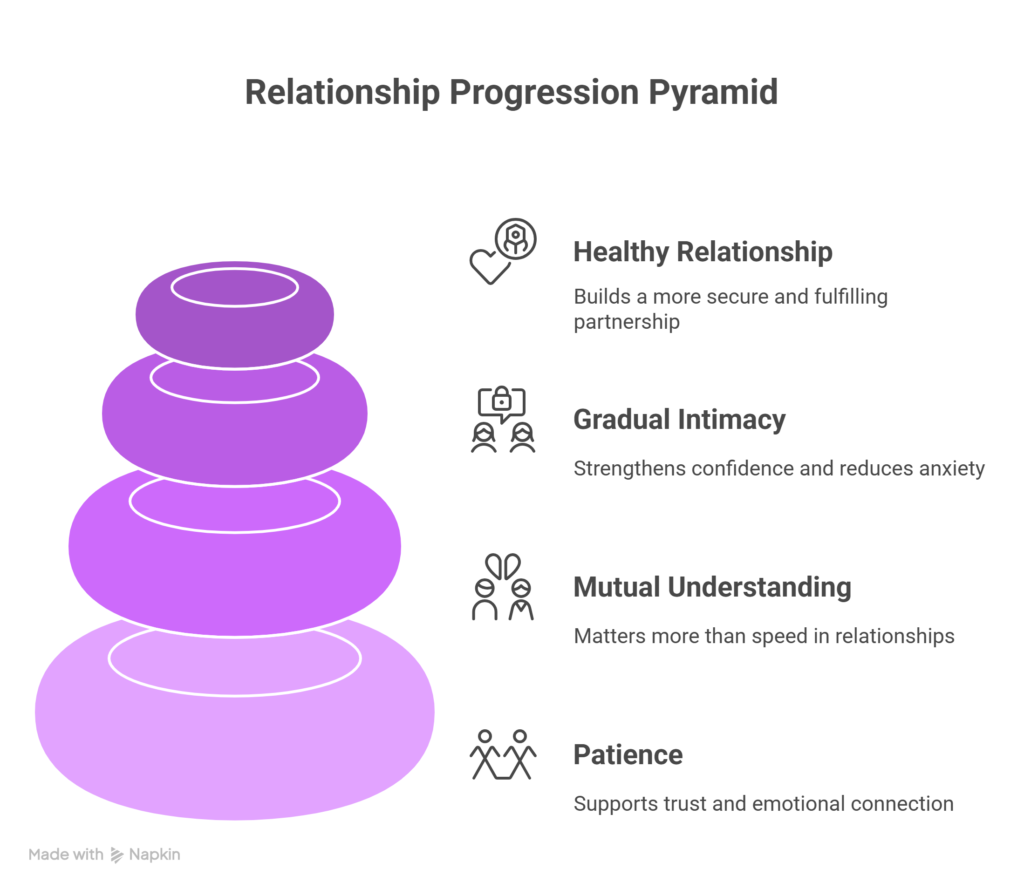
For most people, first night anxiety after marriage is temporary. As the relationship settles into routine and emotional closeness deepens, anxiety naturally reduces. Initial nervousness is often tied to unfamiliarity rather than any long-term concern.
How Comfort Develops Gradually
Comfort grows through repeated, low-pressure interactions and shared experiences. As partners become more familiar with each other’s responses, preferences, and boundaries, uncertainty decreases. This familiarity helps the mind relax and reduces the body’s stress response.
Factors That Support Growing Comfort
- Increased trust through everyday interactions
- Better understanding of each other’s emotional cues
- Reduced fear of judgment over time
- Greater confidence in mutual acceptance
Positive Changes Over Time
With familiarity, many couples experience noticeable emotional and relational improvements. These changes often happen naturally without deliberate effort.
Common Improvements Couples Notice
- Increased relaxation during private moments
- Better communication and emotional openness
- Growing emotional closeness and trust
- Reduced self-consciousness and anxiety
As familiarity strengthens, intimacy feels less pressured and more natural, allowing anxiety to fade and connection to deepen steadily.
10. When Anxiety May Need Professional Support
In most cases, first night anxiety reduces naturally with time, communication, and familiarity. However, for some individuals or couples, anxiety may persist beyond the early days of marriage. When anxiety becomes ongoing or disruptive, seeking professional support can be a constructive and responsible step.
Recognizing Persistent Anxiety
Persistent anxiety is different from short-term nervousness. If emotional distress continues despite reassurance, patience, and open communication, it may indicate deeper concerns that benefit from professional guidance. Early support can prevent anxiety from affecting emotional well-being or relationship satisfaction.
Indicators That Anxiety Is Not Resolving Naturally
- Anxiety does not lessen with time or familiarity
- Repeated avoidance due to fear or distress
- Strong emotional reactions disproportionate to the situation
- Feelings of helplessness or constant worry
Signs Worth Paying Attention To
Professional support may be helpful when anxiety begins to interfere with daily life or the relationship itself.
Situations Where Support Is Advisable
- Anxiety continues for several weeks or months
- Anxiety prevents any form of intimacy or closeness
- Emotional distress affects mood, sleep, or self-esteem
- Communication alone does not reduce fear or tension
Seeking help from a qualified counselor, therapist, or healthcare professional is not a sign of failure. It is a proactive step toward understanding the anxiety, restoring emotional balance, and supporting a healthier, more comfortable relationship.
Final Thoughts on First Night Anxiety After Marriage
First night anxiety after marriage is normal. Many people feel nervous, confused, or unsure, even if they love and trust their partner. These feelings usually come from pressure, expectations, and lack of clear information not because something is wrong.
There is no rule that intimacy must happen on the first night. Comfort, trust, and calm communication are more important than timing. When couples take their time and support each other, anxiety often reduces naturally.
This article is part of the educational content published on Open Sooq, written by Dr. Arun K, to help adults understand intimacy in a respectful and non-judgmental way. If this topic feels relevant to you, explore more educational articles on Open Sooq. If anxiety continues or causes distress, speaking with a qualified healthcare professional is a responsible and helpful step.